June 20, 2026 • Glass Cities Tree Service Team
What Is a Derecho and How Does It Damage Trees in Northwest Ohio?
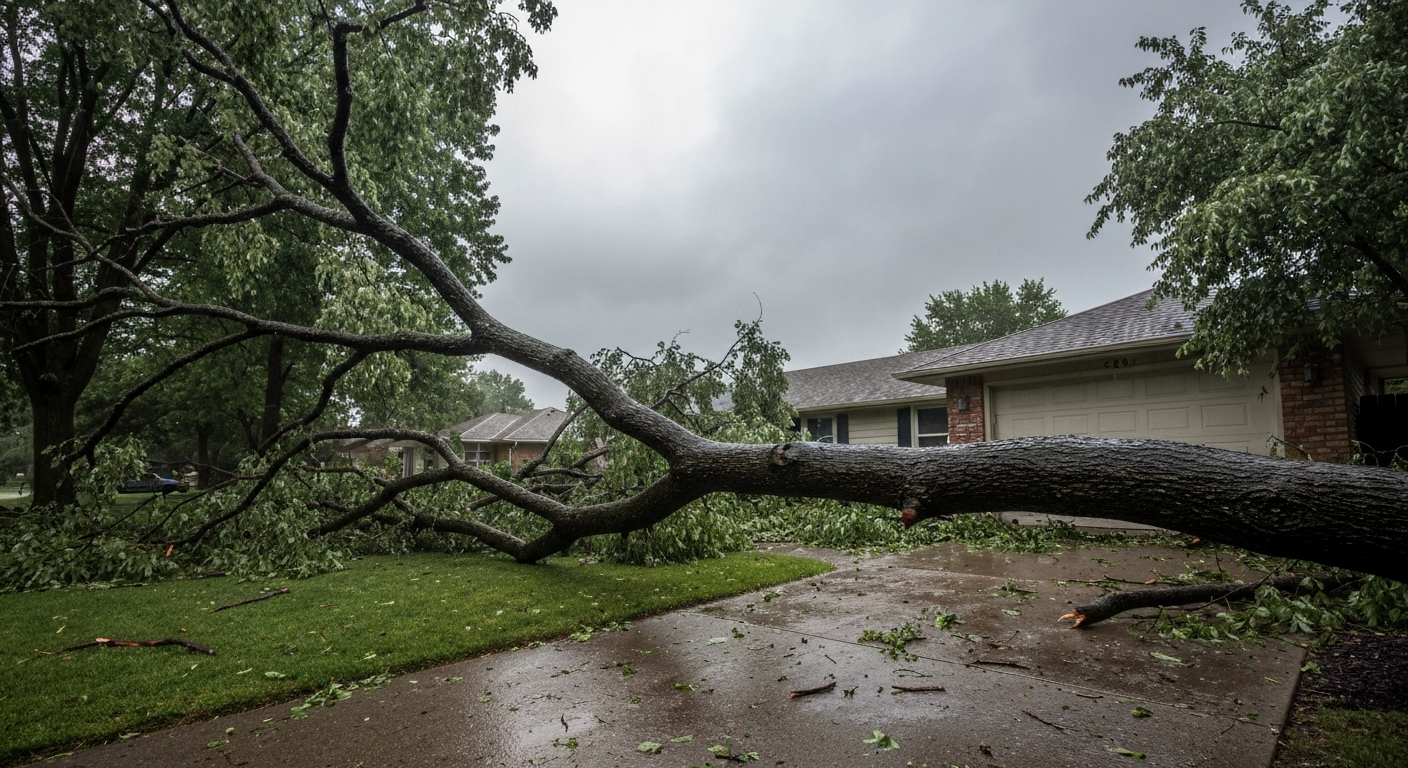
If you've lived in Toledo for more than a few years, you likely remember the sky turning a bruised green-black before a wall of wind slammed into the city. Northwest Ohio is highly susceptible to a specific type of severe weather system known as a derecho. When these storms hit, the tree damage across Northwest Ohio is often catastrophic.
Unlike tornadoes, which cause localized, twisting damage, a derecho acts like a massive bulldozer of wind. Understanding how these storms work can help you prepare your property and know what to do when the sirens sound.
What Exactly is a Derecho?
A derecho (pronounced deh-REY-cho) is a widespread, long-lived, straight-line wind storm that is associated with a fast-moving band of severe thunderstorms. To be classified as a derecho, the wind damage swath must extend for at least 240 miles and include wind gusts of at least 58 mph along most of its length. In Northwest Ohio, these storms often build momentum as they cross the flat agricultural lands of Indiana before slamming into the Toledo metro area.
The winds in a derecho are not swirling like a tornado. They are straight-line winds, meaning they push in a single, relentless direction. This unidirectional force is what makes them so devastating to mature trees. When a 70 mph wind pushes against a fully leafed-out oak tree for ten straight minutes, the sheer physics of the leverage often results in catastrophic failure.
How Derechos Destroy Trees
Not sure about your tree's health?
Take our free interactive Tree Health Check to identify potential hazards before they become emergencies.
Start Free AssessmentThere are three primary ways a derecho damages the urban canopy in cities like Perrysburg, Sylvania, and Maumee:
- Uprooting: Derechos are usually accompanied by torrential, driving rain. This rain quickly saturates the topsoil. When the relentless straight-line winds push against the canopy, the wet soil fails to hold the root system, and the entire tree tips over. This is especially common with shallow-rooted species like silver maples and willows.
- Trunk Snapping: If the root system holds but the wind force exceeds the structural strength of the wood, the trunk will snap. This often happens to trees that have internal decay or structural defects that were previously hidden from view.
- Major Limb Breakage: The forceful winds will strip weak, dead, or over-extended branches from the canopy. These heavy limbs become dangerous projectiles that can crush roofs, vehicles, and fences.
Why Northwest Ohio is Vulnerable
The geography of Northwest Ohio makes it particularly vulnerable to these storm systems, which typically occur during the hot, humid months of June and July. The flat terrain offers little friction to slow the winds down, and the heat and humidity rising from the region fuel the storm's intensity. Furthermore, the mature, established neighborhoods in Ottawa Hills and Sylvania feature massive, aging trees that are highly susceptible to wind damage if they haven't been properly maintained.
Because Northwest Ohio sits in the flat terrain of the Maumee River basin, there are few natural barriers to slow these storms down as they race out of the Midwest.
The "Sail Effect" and How to Prevent It
You can't stop a derecho, but you can prepare your trees for one. The biggest risk factor for a tree during a straight-line wind event is a dense, overgrown canopy.
When a tree hasn't been pruned in years, the leaves and branches form a solid wall. The wind hits this wall and pushes with thousands of pounds of force. By hiring a professional for crown thinning, you remove select branches to open up the canopy. This allows the high winds to pass through the tree rather than pushing against it, drastically reducing the risk of uprooting or snapping.
What to Do After a Derecho Hits Toledo
After the storm passes, the immediate aftermath is often chaotic. Power lines will be down, roads will be blocked, and emergency services will be stretched thin.
If a tree has fallen on your house, stay inside (in a safe area) if there are downed power lines outside. Call 911 and your utility provider. Once it is safe, call an emergency tree service. Do not attempt to clear large, wind-thrown trees yourself. The tension bound up in twisted, fallen branches is incredibly dangerous for anyone without professional chainsaw training and rigging equipment.
Frequently Asked Questions
Get Your Free Tree Service Estimate
We typically respond within the hour.