June 18, 2026 • Glass Cities Tree Service Team
AEP Ohio and Tree Service — What Toledo Homeowners Need to Know About Power Lines
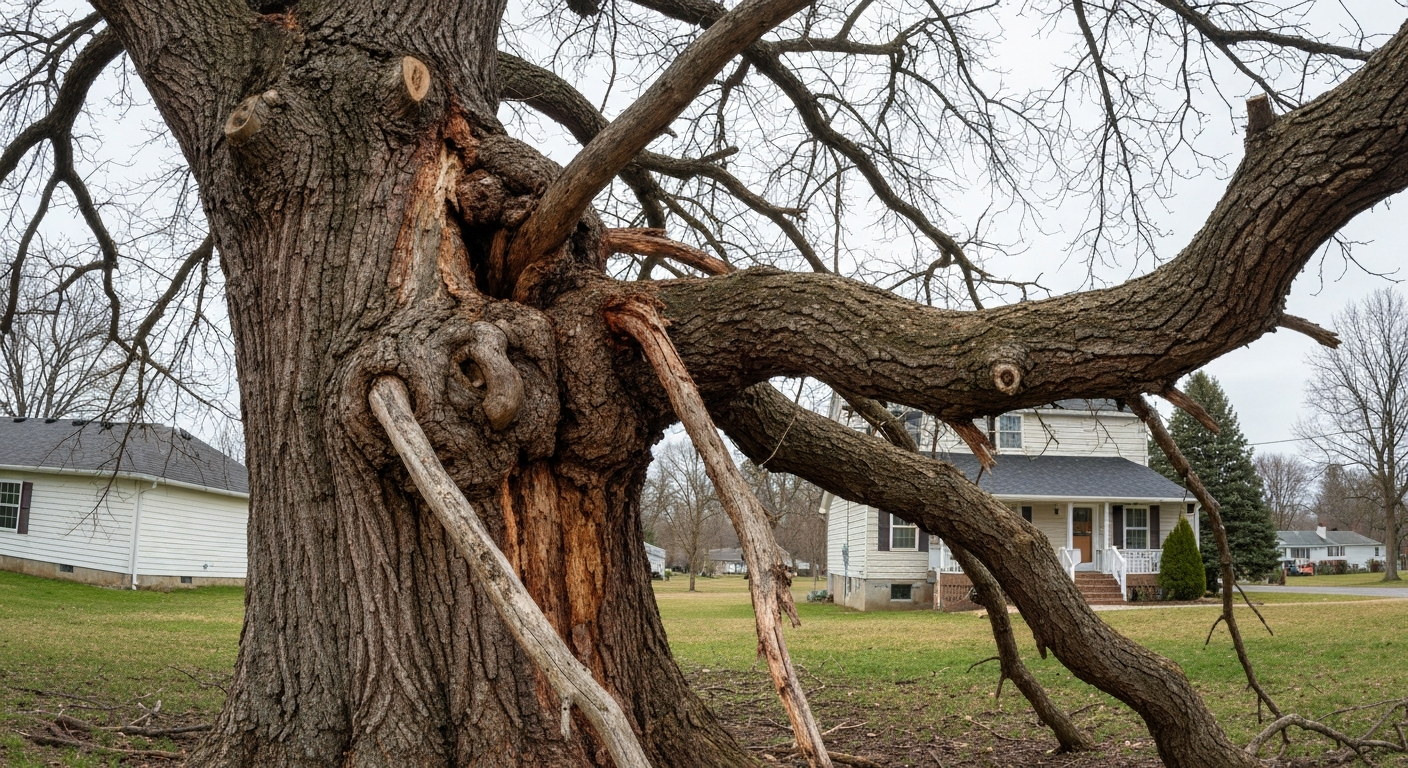
Trees and electricity are a dangerous combination. In Northwest Ohio, severe storms frequently bring branches crashing down onto power lines, causing outages and severe safety hazards. If you have trees growing near utility lines, understanding the rules regarding tree removal and power lines is critical for your safety.
Many homeowners in the region are served by AEP Ohio or Toledo Edison. Navigating utility company policies regarding tree trimming can be confusing. Here is a comprehensive guide on what Toledo area homeowners need to know about managing trees near power lines.
The Danger of Trees Near Power Lines
Power lines carry thousands of volts of electricity. Trees contain water, making them excellent conductors of electricity. If a branch touches a high-voltage line, the electricity can travel down the tree to the ground. Anyone touching the tree—or even standing too close to the roots—can be electrocuted.
During storms, branches that break and fall onto lines are the primary cause of power outages. This is why utility companies invest heavily in vegetation management.
AEP Ohio's Tree Trimming Policy
Not sure about your tree's health?
Take our free interactive Tree Health Check to identify potential hazards before they become emergencies.
Start Free AssessmentUtility companies like AEP Ohio have a legal right (and responsibility) to maintain the easements around their equipment. They operate on a regular cycle to trim trees away from their primary distribution lines.
What AEP Will Do: AEP Ohio will trim or remove trees that are actively interfering with or threatening the primary, high-voltage lines that run from pole to pole along the street or back alleys. They perform "directional pruning" to train the tree to grow away from the wires, which can sometimes result in a V-shape or L-shape canopy.
What AEP Will NOT Do: AEP Ohio is generally not responsible for the "service drop"—the lower-voltage line that runs from the utility pole directly to your house. Maintaining the clearance around the service drop is the homeowner's responsibility.
When to Call a Professional Tree Service
If a tree is threatening your personal service drop, or if you want a tree removed that is near (but not touching) the primary lines, you need to hire a professional.
Never attempt to trim trees near power lines yourself. The Occupational Safety and Health Administration (OSHA) requires that only qualified line-clearance arborists work within 10 feet of high-voltage lines. A standard landscaper or a homeowner with a pole saw has no business being near these lines.
At Glass Cities Tree Service, we can safely manage trees near your service drop. If a tree is dangerously close to the primary lines, we can coordinate with the utility company to have them perform a "make safe" cut or temporarily drop the line so we can safely complete the removal.
Storm Emergencies Involving Power Lines
If a storm brings a tree down onto a power line on your property, treat it as a life-threatening emergency.
- Stay away: Keep at least 30 feet away from the tree and the lines. The ground itself can be energized.
- Assume it's live: Never assume a wire is "dead" just because the power is out in your house.
- Call for help: Call 911 and AEP Ohio (or your specific utility provider) immediately.
- Wait for clearance: An emergency tree service cannot touch the tree until the utility company has arrived, verified the power is off, and grounded the lines.
Frequently Asked Questions
Get Your Free Tree Service Estimate
We typically respond within the hour.