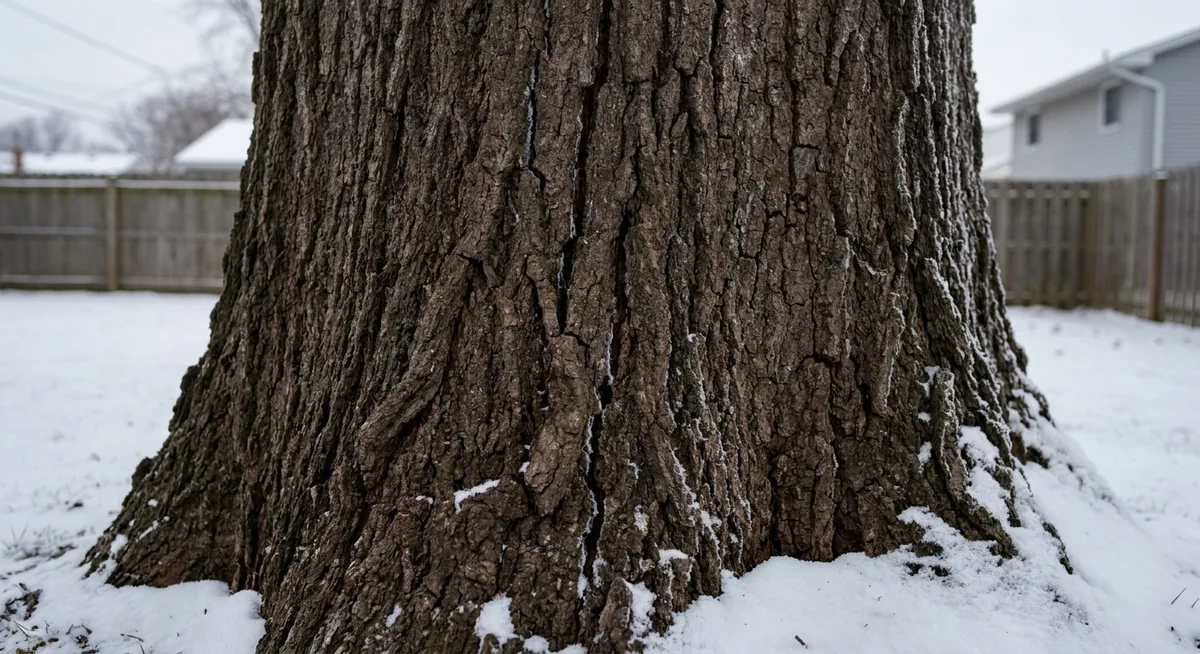
Ohio winters aren’t gentle. Toledo and northwest Ohio get hard freezes, significant snow accumulation, periodic ice events, and enough freeze-thaw cycling to stress even established trees. By the time spring arrives, most homeowners can point to at least one tree in their yard that looks worse than it did in October.
The good news is that a lot of what looks alarming is normal. Trees in this region have adapted to harsh winters, and most of what you see in spring is cosmetic. But some damage is worth taking seriously, and knowing the difference saves you money and prevents problems down the road.
Types of Winter Damage Ohio Trees Face
Winter doesn’t damage trees in just one way. Here’s what’s actually happening out there:
Frost cracks. These are vertical splits in the bark that appear during sudden temperature drops — usually on the south or southwest side of the trunk, where the bark warms in winter sun and then freezes rapidly at night. They can look dramatic — sometimes several feet long — and make a loud cracking sound when they form. Most frost cracks aren’t fatal to an otherwise healthy tree, but they can be entry points for disease and should be monitored.
Snow and ice load. Heavy snow and ice add significant weight to branches and can cause them to bend, break, or peel away from the trunk. Most snow-related bending is temporary — branches often return to their normal position once the load is gone. Ice events are more serious because the load is sustained and the weight per inch is higher than snow.
Freeze-thaw cycling. When temperatures drop below freezing overnight and rise above during the day, the water in soil and tree tissue expands and contracts repeatedly. Over a long winter, this stresses root systems, can heave shallow roots, and weakens the connection between the root ball and surrounding soil in trees that were planted in the past few years.
Sunscald. Young trees, particularly those with thin bark — maples, lindens, cherries — can develop sunscald on the south or southwest side of the trunk. The bark heats up on sunny winter days and then rapidly freezes at night, killing a section of tissue. It shows up as a discolored, sunken, or cracked area on the trunk in spring.
Animal damage. Deer, rabbits, and voles can damage trees significantly over winter. Deer rub bark off trunks. Rabbits and voles chew bark at the base — sometimes all the way around the trunk (girdling), which kills the tree if it’s complete. If you see gnaw marks at the base of a tree in spring, check whether the damage goes all the way around.
What Trees Usually Bounce Back From
Most winter damage in Ohio falls into the recoverable category for established, otherwise healthy trees:
- Frost cracks on mature trees. The tree usually compartmentalizes and seals over them, though the crack often reopens in subsequent winters.
- Branch bending from snow that springs back once the load is gone.
- Minor twig and small-branch dieback at branch tips. Healthy trees replace this growth in spring.
- Superficial bark wounds from animals that don’t encircle the trunk.
- Needle browning on evergreens from winter desiccation. Browning on the windward side of arborvitae, junipers, and pines is common and usually not lethal.
The pattern matters: damage scattered across the tree in small amounts is generally less serious than concentrated damage to the trunk, root system, or a major structural branch.
Warning Signs That Warrant Professional Attention
Some things that show up in spring are worth a professional look:
Canopy that doesn’t fully leaf out. If a significant portion of the crown is failing to bud out by mid-May, that section of the tree may be dead or dying. This is different from a few dead twigs at branch tips.
A major structural branch that cracked, split, or is hanging. Winter can leave broken branches lodged in a tree that aren’t obviously visible until the snow melts. Walk your trees carefully in early spring and look for anything that’s resting on other branches or hanging at an unusual angle.
A lean that wasn’t there before winter. Freeze-thaw cycling can shift root systems, particularly in trees planted in the past few years. A tree that has noticeably changed its angle needs to be assessed.
Bark that’s peeling away from the trunk in large sections. Some bark peeling is normal — sycamores and birches naturally shed bark. But large sections of bark separating from the trunk on trees that don’t normally do this can indicate significant tissue death underneath.
Girdling animal damage. As noted above, bark chewed all the way around the base of a tree cuts off the tree’s ability to move water and nutrients between roots and canopy. If you catch it before the tree fully fails, sometimes a bark bridge graft can save it — but this is specialized work.
Getting Your Trees Assessed After a Hard Winter
The best time to have trees looked at after a significant winter is after they’ve had a chance to leaf out — late April through May — but before summer heat stress starts. By then, you can see clearly which parts of the canopy are healthy and which are dead, and any structural damage is easier to assess when the tree isn’t covered in snow.
If you have older trees, trees that showed signs of stress or disease before winter, or trees that took visible ice or snow damage this year, a spring arborist consultation is worth scheduling. It’s a lot easier to deal with a problem tree in spring, when there’s no urgency, than after it’s failed in a summer storm.
For trees that didn’t make it through winter, removal and stump grinding are straightforward spring projects — and clearing dead trees before summer storm season is good practice.
When Winter Damage Creates an Immediate Safety Issue
Most winter tree damage is slow-moving. But a few situations warrant urgent attention even before spring:
- A major branch that cracked or split and is hanging above a walkway, driveway, or anywhere people spend time
- A tree that has noticeably leaned toward a structure
- Any tree that came into contact with a power line during a winter event
These don’t wait for spring assessment. If you have any of these situations, call a professional to evaluate them before the problem gets worse. Glass City Tree Service handles emergency situations and can triage over the phone to help you figure out what’s urgent and what can wait until the ground thaws.
Frequently Asked Questions
My tree has a deep vertical crack in the bark. Is it going to die?
Frost cracks are alarming but usually not fatal to healthy, established trees. Most trees seal over the wound over multiple growing seasons, though the crack often reopens during hard freezes. Have it looked at to rule out rot inside the crack, and keep an eye on the tree’s overall health year to year.
My arborvitae turned brown over the winter. Is it dead?
Probably not. Browning on the windward or south-facing side of arborvitae is common in northwest Ohio winters — it’s winter burn from desiccation, not death. Wait until late April or early May; if the brown needles are falling off and you see new green growth underneath, the plant is recovering. If the entire plant is uniformly brown with no new growth, that’s a different situation.
Should I cut off branches that look dead after winter?
Wait until you’re confident the tree has finished leafing out for the season, usually mid-May in the Toledo area. What looks dead in March sometimes turns out to be slow to bud. Once you’re certain a branch is dead, yes — removing it is the right call. Dead wood is a target for pests and disease and adds unnecessary weight to the tree.
My young tree is leaning after winter. What should I do?
Young trees, particularly those planted in the last two to three years, can shift during freeze-thaw cycles. If the lean is slight, staking and careful watering in spring can help stabilize it. If the lean is significant or if the root ball has clearly shifted, call a professional — trying to force a young tree back upright without understanding the root situation can cause more damage.
How do I protect trees from winter damage next year?
For young trees: wrap thin-barked species (maples, lindens, cherries) with tree wrap in late fall, stake if needed, and put wire mesh guards around the base to prevent animal damage. Watering well in late fall before the ground freezes helps roots handle the season. For established trees, healthy trees with no pre-existing stress or disease generally don’t need much help.
Glass City Tree Service handles post-winter tree assessments, tree removal, and storm damage response throughout Toledo, Bowling Green, Swanton, Ottawa Lake, and the rest of northwest Ohio. If you’re not sure what you’re looking at after a rough winter, call us at (419) 548-5543 — we’re happy to talk through what you’re seeing before scheduling anything.
If winter ice storms specifically caused your tree damage, see ice storm tree removal in Toledo for what’s different about that situation. And if you’re wondering whether a tree that looks rough after winter is dying or just dormant, we covered how to tell the difference in a separate post.