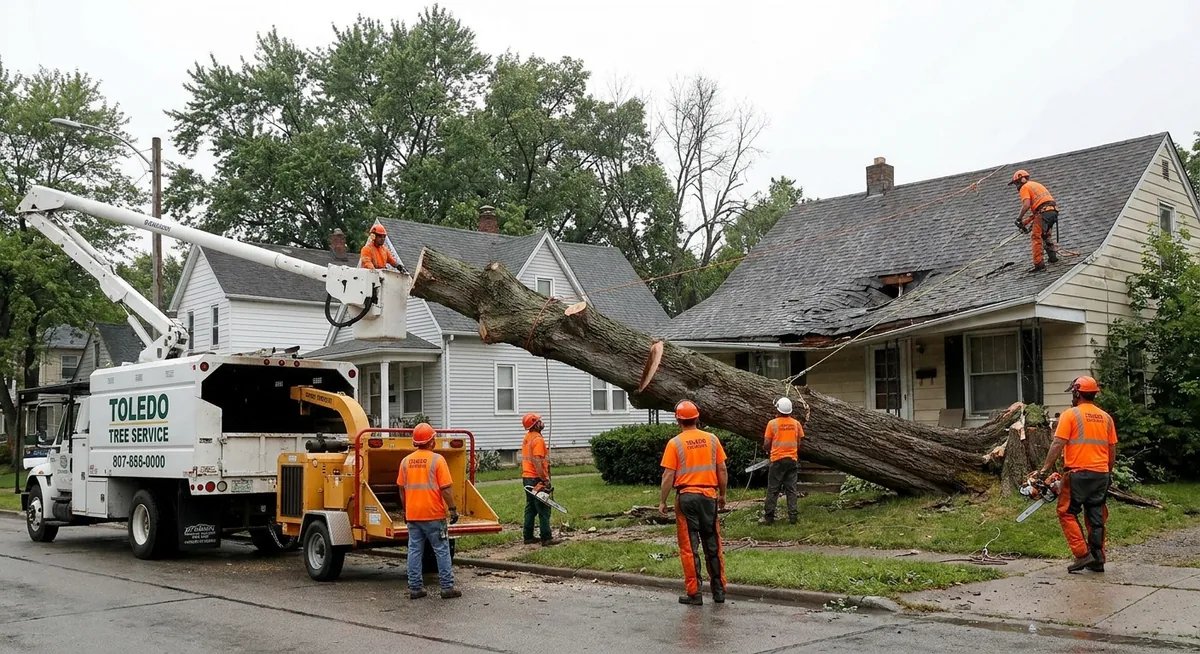
Most homeowners have never had to call an emergency tree service before the first time they need one. That’s actually a good sign — it usually means you’ve been lucky with weather. But when a storm drops a tree across your roof or a massive limb lands in the driveway at 11 p.m., you want to know what you’re walking into before you make the call.
The process is more straightforward than most people expect. Here’s what typically happens from the moment you call to the moment the crew packs up and leaves.
What Counts as a Tree Emergency
Not every storm-related tree problem is a same-day emergency. Understanding the difference helps you communicate what you need when you call.
Genuine emergencies:
- A tree or large limb has landed on your house, car, or any structure
- A tree is actively leaning toward a building or has partially uprooted
- A limb is hanging directly over a door, driveway, or occupied space
- A tree or branch has brought down a power line or is in contact with one
Serious but not always same-day:
- Multiple large limbs down in the yard but not threatening anything
- A tree that split but isn’t leaning toward anything
- Major debris covering a non-essential path or area
If you’re not sure which category you’re in, call and describe what you see. Any reputable company can help you figure out urgency over the phone.
What Happens When You Call
When you reach a tree service, they’ll ask you a few questions: what fell or what’s damaged, whether it’s touching a structure or a power line, and roughly where you are. The more specific you can be, the better — “a large limb, maybe 20 feet long, is resting on the roof over the garage” gives a crew a much clearer picture than “a tree fell on my house.”
Based on what you describe, the dispatcher will figure out what equipment the job likely needs. Some jobs require just a crew with chainsaws and a chipper truck. Others need a bucket truck or crane. Sending the wrong rig means a delay, so the more information you can give upfront, the faster things move.
After a widespread storm, crews across the area are all getting calls at the same time. Response times can stretch. Be honest about whether you have a true emergency — a tree on your roof takes priority over cleanup of scattered branches, and crews triage accordingly.
On the Job: What the Crew Does
Before anyone starts cutting, the crew will walk the property and assess the situation. They’re looking for anything that might shift, fall, or complicate the work — the position of the limb or tree relative to your house, whether anything is under tension, whether there are other compromised limbs nearby.
The crew will work in order of what’s most dangerous first. If a limb is sitting on your roof, they’ll deal with that before cleaning up debris in the yard. If a tree is partially uprooted and leaning, they’ll stabilize and remove it before dealing with limbs that are already down and no longer moving.
Larger material gets cut into sections. Smaller branches get chipped. Everything gets hauled away unless you ask to keep wood — some people want firewood, and most crews are happy to leave cut sections if you ask before they start.
Depending on the job, you may be able to watch from a safe distance, or the crew may ask you to stay back entirely while they work. Follow their guidance — they’re managing a lot of variables at once.
After the Work Is Done
Before the crew leaves, do a walkthrough with them if you can. This is your chance to ask a few useful questions:
- Did you notice any other trees or limbs on the property that looked concerning?
- Is there anything here that should be looked at in the next few weeks?
- Do I need a separate cleanup crew for the smaller debris, or is that included?
Good crews notice things during a job that you wouldn’t know to look for — a crack in a tree trunk, a root system that looks like it lifted, a secondary limb that’s hanging loosely. They may not volunteer every observation unless asked, so it’s worth asking directly.
If a tree hit a structure, the crew typically focuses on safely removing the tree and debris. Structural repairs to the building are a separate contractor conversation.
Stay Safe While the Crew Is Working
Once a professional crew is on-site, the most helpful thing you can do is stay clear of the work area. That means not walking under trees being cut, not standing near a vehicle that’s being loaded, and keeping kids and pets inside.
Emergency tree work after a storm involves a lot of variables — compromised wood that can split unexpectedly, limbs under tension that release when cut, equipment moving in tight spaces. Crews work around this every day and know what to watch for. The risk goes up when people are in the work zone who aren’t part of the crew.
Frequently Asked Questions
How fast can an emergency tree crew get to me in Toledo?
It depends on how busy crews are and what’s happening across the service area. After a widespread storm, everyone is calling at once. True emergencies — tree on a structure, active safety hazard — get prioritized. For less urgent situations, it may be same-day or next-day.
What equipment does emergency tree removal require?
It depends on the job. Most situations can be handled with a chainsaw crew and a chipper. Larger trees, tight spaces, or trees on structures sometimes require a bucket truck or crane. When you call, describe what you have so the crew can bring the right setup.
Do I need to be home during the work?
It’s helpful but not always required. You’ll need to be available when the crew first arrives to walk through the situation and sign off on the work. After that, some homeowners leave — especially for smaller jobs. For jobs involving your roof or a structure, staying close is wise so you can communicate with the crew if questions come up.
What if the tree is touching a power line?
Call Toledo Edison first — do not let a tree service crew work around an active downed line. Once the utility has made the line safe, the tree service can proceed. This is non-negotiable for safety reasons.
Should I document the damage before the crew arrives?
Yes, especially if you’re planning to file an insurance claim. Take photos and video from a safe distance before any cleanup begins. Show the damage in context — the tree relative to your house, the full extent of what fell. This documentation matters for insurance adjusters.
Glass City Tree Service responds to emergency calls throughout Toledo, Oregon, Rossford, Holland, and the wider northwest Ohio area. Call (419) 548-5543) — we’ll ask you a few questions and give you a straight answer about how fast we can get there and what to expect.
If you’re trying to figure out whether your storm-damaged tree needs to come down entirely or can be saved, read how to tell if a tree needs to come down after a storm. And if you’re dealing with the broader aftermath of storm cleanup, here’s how to prioritize.