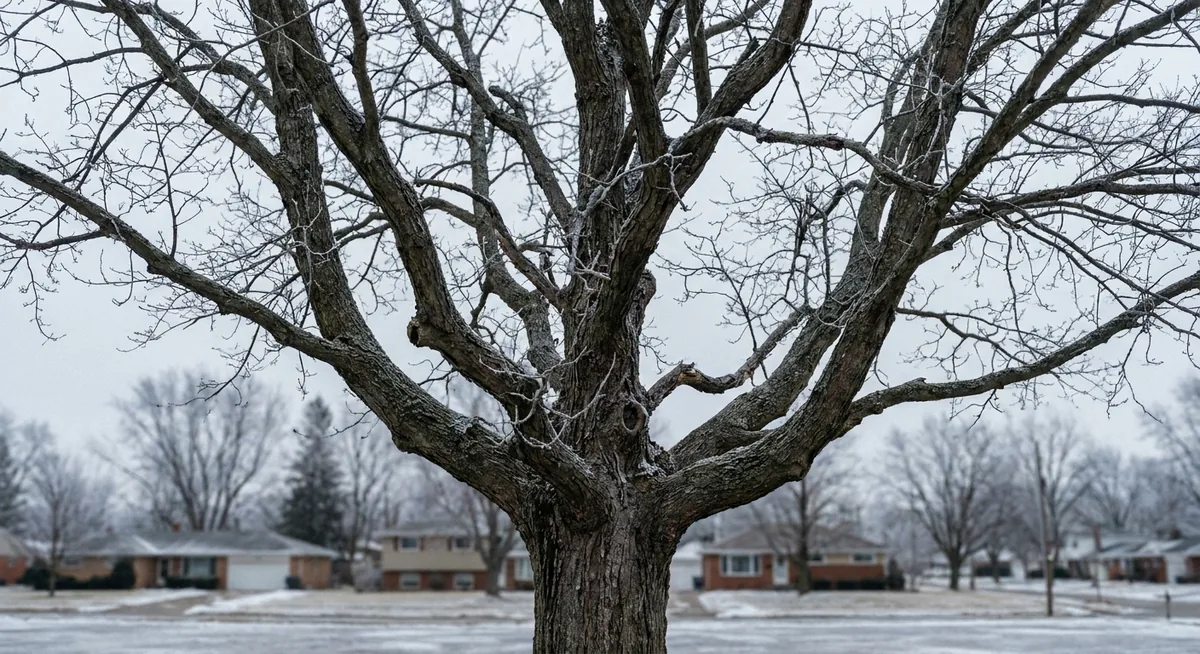
Every February, we get calls from Toledo homeowners convinced they have a dead tree in their yard. Sometimes they’re right — but often the tree is just dormant, waiting for spring to push out new leaves. The two can look almost identical in January or February, which is understandably alarming.
Here’s how to tell the difference.
The Scratch Test — Start Here
Pick a young branch, about the diameter of a pencil. Use your fingernail or a pocket knife to lightly scratch through the outer bark.
- Green or white-green tissue underneath — the tree is alive. That layer (the cambium) is living tissue. If it’s moist and green, the branch is healthy.
- Dry, brown, or papery tissue — that branch is dead.
Do this test on a few branches in different parts of the canopy. A fully dormant tree will be green everywhere you scratch. A dying tree may have green sections in some areas and brown, dry tissue in others. A dead tree will be consistently dry and brown throughout.
The Snap Test
Dead branches are brittle. Bend a small twig — if it snaps cleanly and the break looks dry and pale inside, it’s dead. A living branch will flex before it breaks and show moist green tissue at the snap point.
Look for These Signs of a Dying Tree
Bark problems:
- Large sections of bark falling off without any visible new growth underneath
- Deep cracks or “cankers” — sunken, discolored areas — in the trunk
- Fungal growth or conks (bracket fungi, shelf mushrooms) at the base or on the trunk
Structural signs:
- The trunk sounds hollow when you knock on it
- You can see decay at the base, in crevices between major limbs, or at a wound site
- The crown is significantly thinner than it was a few years ago — known as “crown dieback”
Root zone signs:
- Heaving or uplifted soil around the base, which can indicate root failure
- Leaning that developed recently and wasn’t there before (not all lean is bad — a tree that’s always leaned moderately is usually stable)
Signs That Just Mean Dormancy
- Bare branches with no leaves in winter — totally normal for deciduous trees
- Slightly gray or silver-looking bark on younger trees — often just weather exposure
- No new leaves yet in early spring when other trees around it are still just budding out — some species leaf out later than others
One common situation: ash trees in the Toledo area often look completely bare and dark-barked heading into spring, and homeowners worry they’re dead. This is particularly tricky because so many ash trees in northwest Ohio have been killed by emerald ash borer — but the scratch test will tell you definitively.
When You’re Not Sure, Call
If the scratch test shows mixed results — some green, some brown — the tree may be in decline rather than fully dead. That’s still important information. A tree in rapid decline can be structurally unstable even before it dies completely, and a large limb from a weakened tree is just as dangerous as one from a dead tree.
Contact Glass City Tree Service for a tree health assessment in Toledo and the surrounding area. We can walk your property, identify problem trees, and help you decide what to remove and what can be saved.